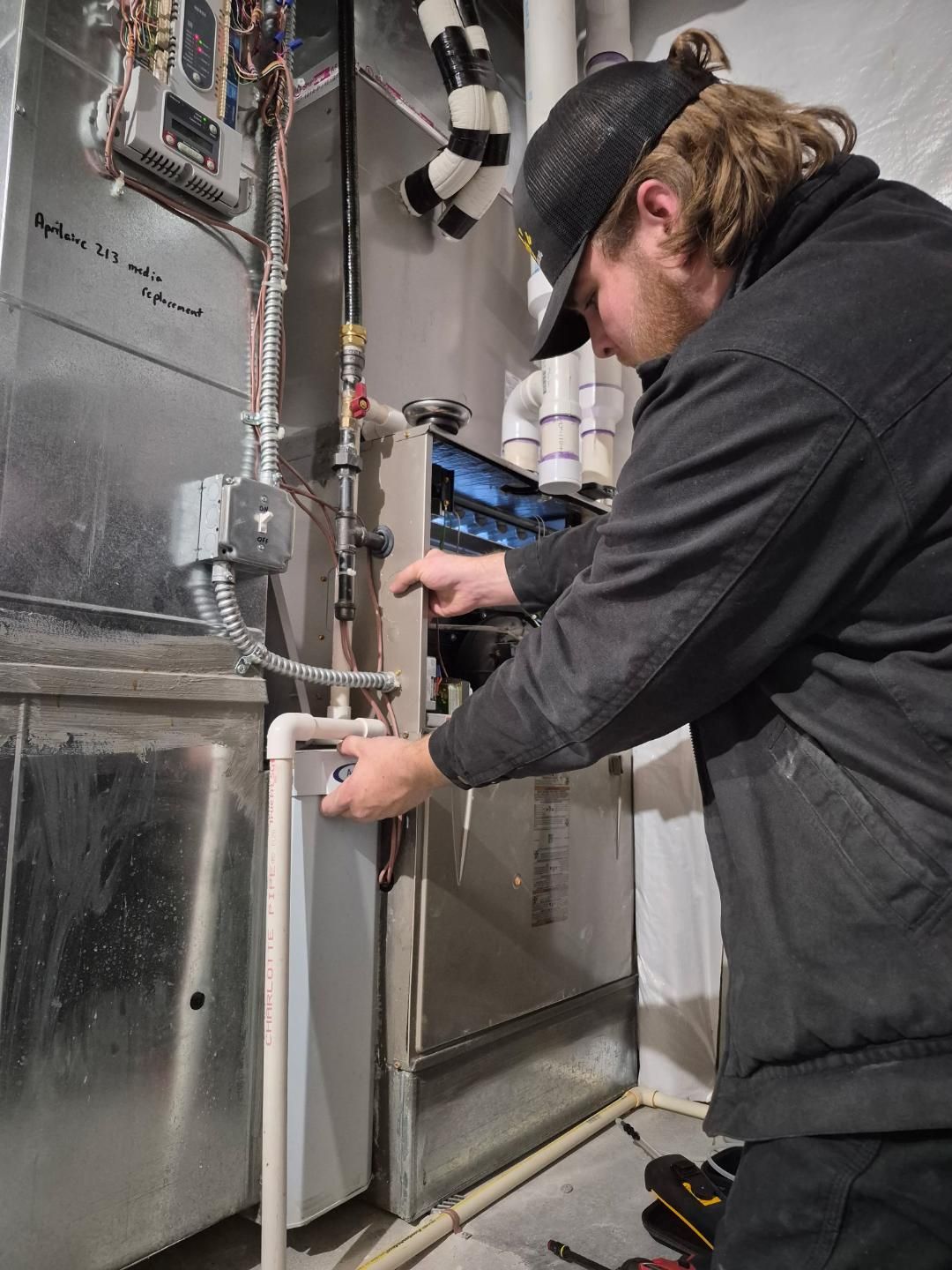
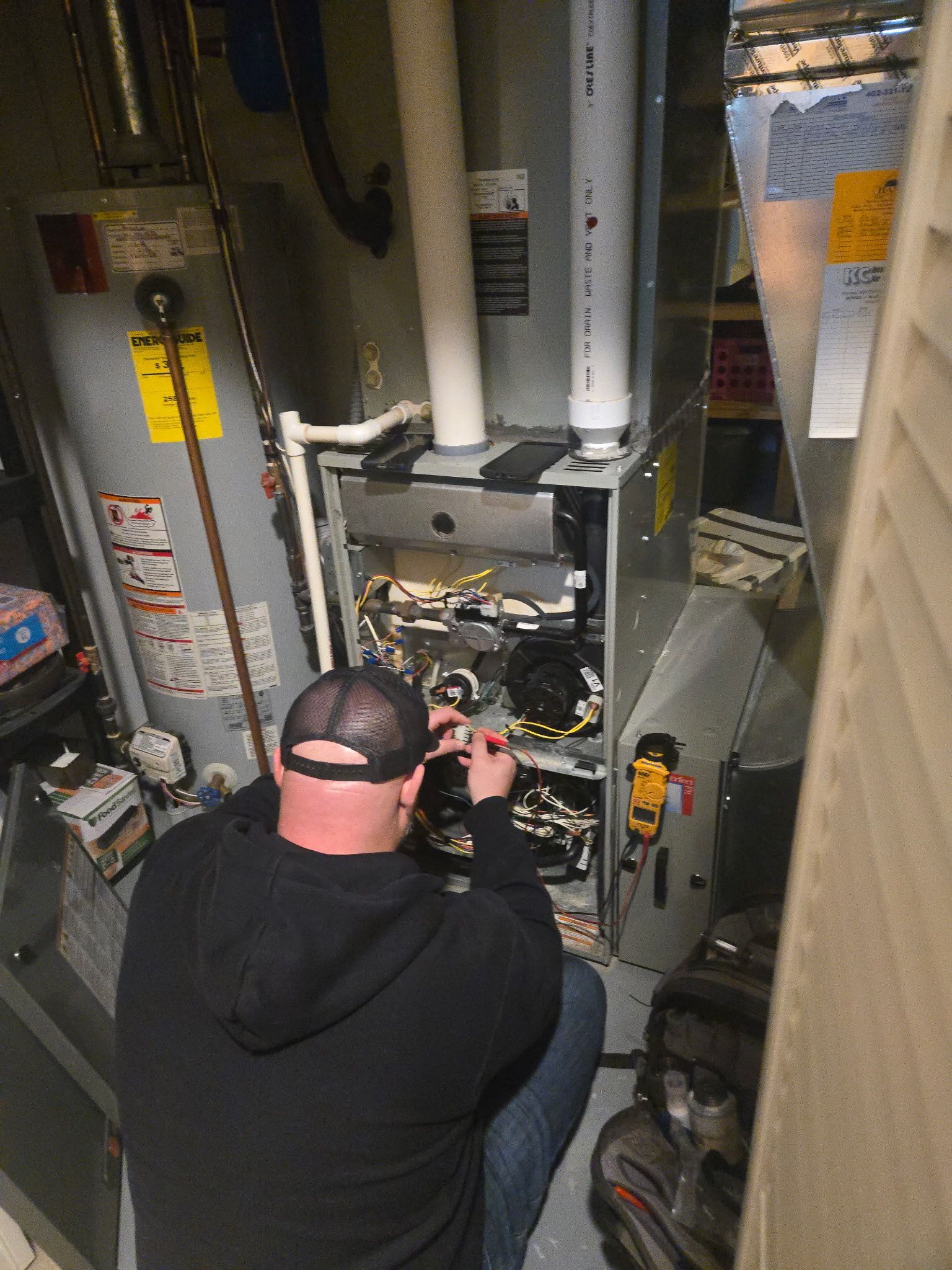
If your furnace is giving you trouble, the first question you are probably asking is whether to fix it or replace it. The honest answer depends on the age of your system, the cost of the repair, and how many times you have already had it serviced in the past few years. Here is a straightforward way to think through it.
The Age-Plus-Repair-Cost Calculation
The most reliable framework for the repair-versus-replace decision is this: multiply the age of your furnace in years by the estimated repair cost. If that number exceeds $5,000, replacement is usually the better investment.
A 10-year-old furnace facing a $400 repair scores 4,000, so repair makes sense. A 16-year-old furnace facing a $450 blower motor replacement scores 7,200, so replacement starts to look more financially sound, especially when you factor in that older systems run at lower efficiency and will likely need more repairs in the near future.
This is not a hard rule, but it gives you a concrete starting point when a technician is standing in your utility room with a parts estimate.
System Age and What It Tells You
Most gas furnaces have a useful lifespan of 15 to 20 years in Nebraska's climate with proper annual maintenance. Electric furnaces often last a few years longer. If your system is past the 15-year mark, even a successful repair buys you limited time.
An aging furnace also operates less efficiently than it did when it was new. A furnace installed in the early 2000s may be running at 60 to 70 percent efficiency. A modern high-efficiency gas furnace operates at 95 percent or higher. That difference shows up on your utility bills every month throughout the heating season.
Signs Your Furnace Is Close to End of Life
Beyond age, certain failure types signal that a furnace is approaching the end of its useful life:
• A cracked heat exchanger, which is a safety issue that makes replacement the only responsible option
• Repeated failures within a single season, even if each individual repair is inexpensive
• Carbon monoxide alerts in the home without another obvious source
• The system running almost constantly to maintain temperatures it previously reached easily
• Parts that are becoming scarce for your system's age and model
Any of these, and especially a cracked heat exchanger, should move the conversation toward replacement rather than repair.
When Repair Is the Right Call
Repair makes clear sense when your furnace is under 12 years old and the failure is a single component such as an ignitor, a flame sensor, a capacitor, or a thermostat fault. These are normal wear items on an otherwise healthy system. A well-maintained furnace in this age range has substantial life left and a targeted repair at a reasonable cost is a straightforward decision.
If your system is between 12 and 15 years old, weigh the repair cost against the system's track record. One repair in that range on a well-maintained furnace is different from the third repair in two years on a system that has been neglected.